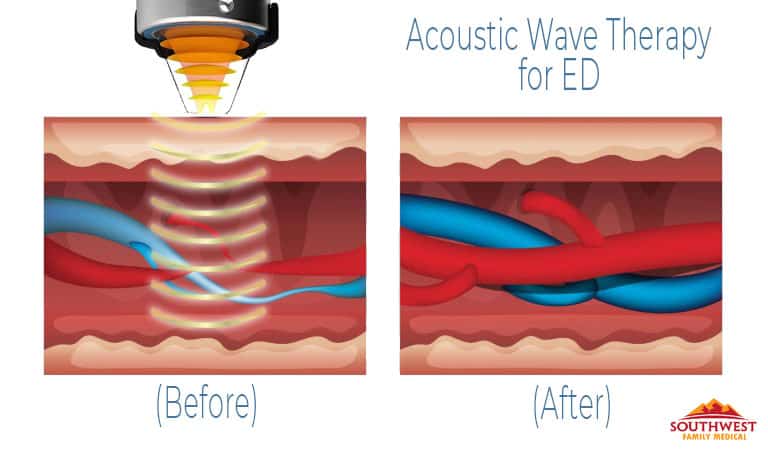
Shockwave treatment is one of the many treatment alternatives for erectile dysfunction (ED). Though it isn't FDA approved, the science behind this pill-free treatment has been supported by a number of that have actually shown up motivating results. Shockwave treatment appears to work best for men with vasculogenic ED, which is a blood vessel condition that affects blood circulation to tissue in the penis. The therapy's effectiveness with other reasons for ED remains to be seen. The clinical term for shockwave therapy is low-intensity shockwave treatment (Li, SWT). It's a noninvasive therapy that's been used in orthopedics for many years to help recover damaged bones, hurt ligaments, and hurt tendons.
Using targeted high-energy sound waves, Li, SWT can speed up tissue repair and cell growth. Erections count on healthy blood circulation to the penile tissue. Shockwave therapy is viewed positively as a way of fixing and reinforcing capillary in the penis and improving blood circulation. Increasing blood flow to the penis is the exact same goal of more traditional ED treatments, such as oral medications, including sildenafil (Viagra) and tadalafil (Cialis). Shockwave treatment is administered with a wand-like gadget positioned near various locations of the penis. A healthcare supplier moves the gadget along parts of your penis for about 15 minutes while it discharges gentle pulses.
The pulses trigger enhanced blood circulation and tissue improvement in the penis. Both of these changes can lead to erections adequate for sex. There's currently no recognized recommendation for treatment duration or frequency. However, a of clinical trials found that the most common treatment plan was twice weekly for 3 weeks, followed by 3 weeks without treatments, and another 3-weeks of twice-weekly treatments. The analysis discovered that the results of shockwave therapy lasted about a year. The same 2019 evaluation and meta-analysis discovered that erectile function substantially improved with shockwave therapy. Outcomes were best amongst males with vasculogenic ED. A 2010 pilot study discovered that among 20 males with vasculogenic ED, all experienced improved erectile function after 6 months of shockwave treatment.
Despite this motivating research, the Food and Drug Administration (FDA) hasn't authorized shockwave therapy as a treatment for ED. Some doctors might still offer shockwave treatment for ED, however utilize beyond a research study setting is considered off-label. FDA approvals for brand-new treatments are always accompanied by standards for physicians to follow and negative effects to be shared with clients. Similar to any unapproved treatment, if you choose to do shockwave treatment for ED, there may be threats that aren't appropriately explained, or you might be spending money on a treatment that doesn't live up to its promises. Furthermore, treatments that haven't been authorized by the FDA typically aren't covered by insurance coverage.
The SMSNA advises that shockwave treatment only be done under stringent research procedures. Shockwave treatment is pain-free for most males. And as previously specified, readily available research study has found couple of, if any, adverse effects. Nevertheless, that doesn't mean that the treatment is safe. It's still a relatively new treatment, and more research needs to be done to figure out negative effects, issues, and long-term effectiveness. Periodic episodes of ED are typical. Tension, lack of sleep, alcohol use, or momentary hormone changes, amongst other elements, can make it hard to maintain an erection. Nevertheless, if ED ends up being more frequent and is impacting your sex life, see your physician.